
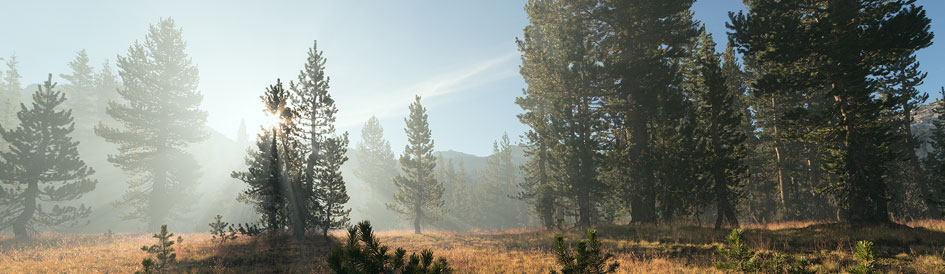
Looking again at Hetch Hetchy

Nine decades after senators debated flooding Yosemite’s twin jewel, the arguments still resonate
Published August 22, 2004
More than 90 years ago, just before the stroke of midnight on Dec. 6, 1913, the U.S. Senate voted to flood one of the jewels of the national park system.
By a vote of 43-25, the senators approved San Francisco’s proposal to build a dam in Yosemite National Park that would flood the Hetch Hetchy Valley, a smaller twin of the Yosemite Valley. Signed promptly by President Woodrow Wilson, the bill, known as the Raker Act, allowed San Francisco to build the dam to supply water and electricity.
“It was the first time in American history that anybody said no to development,” said Bob Righter, a retired Southern Methodist University professor who is writing a book about Hetch Hetchy to be published next year. “They knew they were going to lose,” he said of congressional opponents, “but put up the best fight that they could.”
The debate about the young national park system weighed public values -tourism versus wilderness versus urban needs. Over the years, some have suggested the decision be revisited, but they never got anywhere. Any change at Hetch Hetchy would mean changing the Raker Act, and a new national debate would arise.
That debate is worth having, as a series of editorials beginning today on Page 4 of this section explains. Nearly 91 years after the debate, there is mounting evidence that it is possible to see another way to accomplish the Raker Act’s aims while restoring Hetch Hetchy to the national park system and the American people.
That debate is likely to echo much from the landmark 1913 debate in the Senate. Here, taken from the Congressional Record, are excerpts of that debate. The rhetoric may seem a bit flowery and stilted to the contemporary ear, but the issues and arguments foreshadow the debate ahead about Hetch Hetchy’s future.
NEBRASKA SENATOR GEORGE NORRIS: Mr. President, when I was interrupted, I was about to describe the Hetch Hetchy Valley, and I started in to use the Senate chamber as an illustration. Let us suppose that the Senate chamber represents the Hetch Hetchy Valley. It will then represent an irregular floor containing between two-and-a-half and three square miles, surrounded by cliffs that rise 5,000 feet into the air. The floor will be the ordinary meadow land, irregular it is true, and the walls not straight, as those of the Senate chamber are, but irregular and varying, as we would naturally expect in a large canyon of that kind. The floor of the valley has some timber on it, but nothing of any value, although there are thousands of honest people who believe that the flooding of this valley is going to ruin some of the great trees of California. The trees in the valley are ordinary scrub pines.
Away over yonder in the distance there is a waterfall, the Tuolumne River, that comes down over the cliffs, falling between the rocks, and then trickling through the outlying rocks into a stream that runs through the valley. At the outlet of the valley the walls of this great chasm come almost together, so that they are at the opening less than 65 feet apart. There are thousands of people in the United States who honestly believe that this beautiful waterfall coming down over the cliffs is going to be ruined if we pass this bill, but I shall show you that it not only will not be ruined, but that it will be made accessible.
TEXAS SENATOR MORRIS SHEPPARD: The senator was speaking of the fact that the valley was a hopeless swamp during certain seasons and that the surveyors had to wear gloves for protection against mosquitoes.
NORRIS: Think of it for a moment. There has never been in that valley a vehicle. We have read circulars by the thousand that have gone over the country describing it as the nation’s playground. In the sand of that valley there has never yet been made the impression of a child’s foot. As far as I know, the eyes of no woman or child have ever beheld it. It is true that the government of the United States by the expenditure of a couple of million of dollars could build roads in there, but who is there here who thinks for a moment that it is going to do it?
COLORADO SENATOR CHARLES THOMAS: If the Senator from Nebraska will allow me, I will say, for the information of the Senator from Michigan, that the maximum number of visitors to the Hetch Hetchy Valley is 279.
NORRIS: San Francisco years ago awoke to the fact that she had to get additional water. She has spent thousands and thousands of dollars and years of time surveying all of the country, all of the watersheds, not to see whom she could destroy or injure, but to see where, under all the circumstances, was the best source of supply. She examined all of the other sources that have been mentioned and some that have not been mentioned. She settled on Hetch Hetchy.
Mr. President, there are hundreds and thousands of horsepower going to waste in this valley. It seems to me almost a sin not to do it.
Hold up your calloused hands, you senatorial strap hangers, who for years have been riding on cars here and paying for something you did not get. Defeat this bill and you will receive the plaudits, the acclaim, and the praise of every hydroelectric corporation in the State of California. Pass it and you give into the hands of the people a power that God intended should do some good for man.
UTAH SENATOR REED SMOOT: I approve of all the Senator has said in regard to harnessing this mammoth power, but I wish to say to the Senator that the city of San Francisco can create very nearly the same horsepower by using the Cherry Valley drainage area and the Lake Eleanor drainage area, and do all the Senator has said for the good people of San Francisco.
NORRIS: No; she can not.
SMOOT: That is what the report says, Mr. President.
NORRIS: Pass this bill, and its ultimate effect is going to reach away beyond the lives of any men who live. If by some convulsion of nature the country out there is not destroyed, in a thousand, yes, a million, years from now the people will still be getting the benefit of this legislation, which can hurt or harm absolutely no man on earth. Pass this bill, sir, and millions of children yet unborn will live to raise their tiny hands and bless your memory.
RHODE ISLAND SENATOR HENRY LIPPITT: I found myself very strongly moved by two directly opposing influences -my appreciation of the benefits of natural scenery, my great sympathy with the people who enjoy them, and the importance and value of water.
The grandeur of its cliffs is still going to be there; the beauty of the Wapama Falls is going to be there uninterfered with; and, what is more important, there is going to be a means provided for the general public of seeing these things. There is no use in natural beauty that is inaccessible, and the present condition of that valley is such, as I understand it, that no wagon has ever penetrated to its interior.
Under this project there is going to be built a first class wagon road, the cost of which will be over $600,000, which will circle the valley. It is going to be so located that the scenic effects will be readily accessible, and I think that all of this is a strong recommendation for the project.
SMOOT: I want to call the Senator’s attention to the fact that there can be developed on the Cherry Valley drainage area and the lake Eleanor drainage area 98,000 horsepower. The water from that source, according to the report, amounts in Cherry Valley to 160,000,000 gallons daily, and the Lake Eleanor 130,000,00 gallons daily, which will be sufficient for a city of 2,000,00 population, 100 gallons per day for each man, woman and child. Why would it not be better for San Francisco to take that and develop that water and power and not interfere with Hetch Hetchy at all?
LIPPITT: I will say in reply to that, that I am a Yankee, and the Yankees very frequently answer one question by asking another. I might very well ask the Senator why would it be better? I do not ask him to answer that question now, because I know his fertile mind will find a great many most excellent reasons why it will be better, but I will tell him why I think it is better to adopt this measure now. The reason why I think so is because I want both sources of supply developed.
SMOOT: The claim has been made, and made strenuously, that San Francisco can not get water anywhere else; that she can not get power anywhere else; that this is the only source of supply.
MISSOURI SENATOR JAMES REED: It seems to me that if this is not a case of “much ado about nothing,” it surely is a case of much ado about little. The Senate of the Untied States has devoted a full week of time to discussing the disposition of about 2 square miles of land, located at a point remote from civilization, in the very heart of the Sierra Nevada Mountains, and possessing an intrinsic value of probably not to exceed four or five hundred dollars. The great national park in which the paltry two square miles to be taken is embraced contains, I am informed, over 1,100 square miles of territory. It is merely proposed to put water on these 2 square miles. Over that trivial matter the business of the country is halted, the Senate goes into profound debate, the country is thrown into a condition of hysteria, and one would imagine that chaos and old night were about to descend upon the land.
Women’s societies are meeting and passing resolutions. Business organizations are solemnly pondering the tremendous question. College professors who never have been near enough the Yosemite Park to know anything whatever about it are enlightening us with reference to our duty. The degree of opposition increases in direct proportion with the distance the objector lives from the ground to be taken. When we get as far east as New England, the opposition has become a frenzy.
NEW JERSEY SENATOR JAMES MARTINE: I wish to suggest that that may be very much a matter of taste. It may be the judgment of the Senate from Missouri that it would add very much to the scenery, but just as fairly and honestly it may be the judgment of other senators that it would detract from it.
REED: Mr. President, there are people in this world to whom the mere mention of water is obnoxious (laughter).
RHODE ISLAND SENATOR LEBARON COLT: I am opposed to the passage of this bill because I think, on principle, the national parks of this country should remain devoted to the uses for which they were intended, in the absence of some grave public necessity. I am opposed to the passage of this bill because I think that Congress occupies a peculiar relation toward the people with respect to the national parks; that we are in a broad sense the custodians and trustees of the people -to protect and safeguard these parks – and that, therefore, in the absence of any urgent public necessity, we should recognize what appears to be the overwhelming voice of the people in opposition to the passage of this act.
NEVADA SENATOR KEY PITTMAN: I want to call your attention to the fact that nearly all the protests against this bill have emanated either from Massachusetts or from some of the other New England states, and with the rapidity of slander have worked out through the East and the South. Is it not strange that a matter involving facts and physical conditions in the State of California should be first attacked in the far New England states?
WASHINGTON SENATOR MILES POINDEXTER: There is another source of supply, to which I want very briefly to refer, which has not been mentioned heretofore, and that is the Yuba River.
Yet it is proposed here, because the city of San Francisco has taken a fancy to the peculiar advantages of this valley for a site for the construction of a dam, to ignore the general interests of the country, and to refuse to take a comprehensive survey of the entire California Valley. Because they desire this particular water, it is proposed to take it, although there is other water equally as good which they could obtain elsewhere without doing injury to a single soul.
WYOMING SENATOR CLARENCE CLARK: We all know that this is a log rolling proposition.
Do not put yourselves in the position of a man in the rapids above Niagara. He knows he is in the rapids, but he is callous to his danger. He says there is no danger in the Falls; yet many chances to one the next day that gentleman will be fished out of the pools below, and the following day friends will be sending flowers to the church and condolences to the widow.
SEVERAL SENATORS: Let us vote now.
Yeas 43 Nays 25 So the bill was passed.
Thereupon (at 12 o’clock midnight) the Senate adjourned.
Three voices that argued over Hetch Hetchy’s future
Sen. George Norris
“Pass this bill, and its ultimate effect is going to reach away beyond the lives of any men who live,” said the Nebraska Republican, who in 1913 was among the leading advocates of the dam that would inundate Hetch Hetchy a decade later.
John Muir
“Woe is he and thee and me and all the world’s beauty-lovers that such dollar-dotted tangles should appproach our sacred Sierra temple,” wrote the great California naturalist who died less than a year after leading the national opposition to the dam.
Sen. Reed Smoot
“Why would it not be better for San Francisco to take (another site) and develop that water and power and not interfere with Hetch Hetchy at all?” asked the Utah Republican who waged a long but unsuccessful fight in the Senate against the dam.
